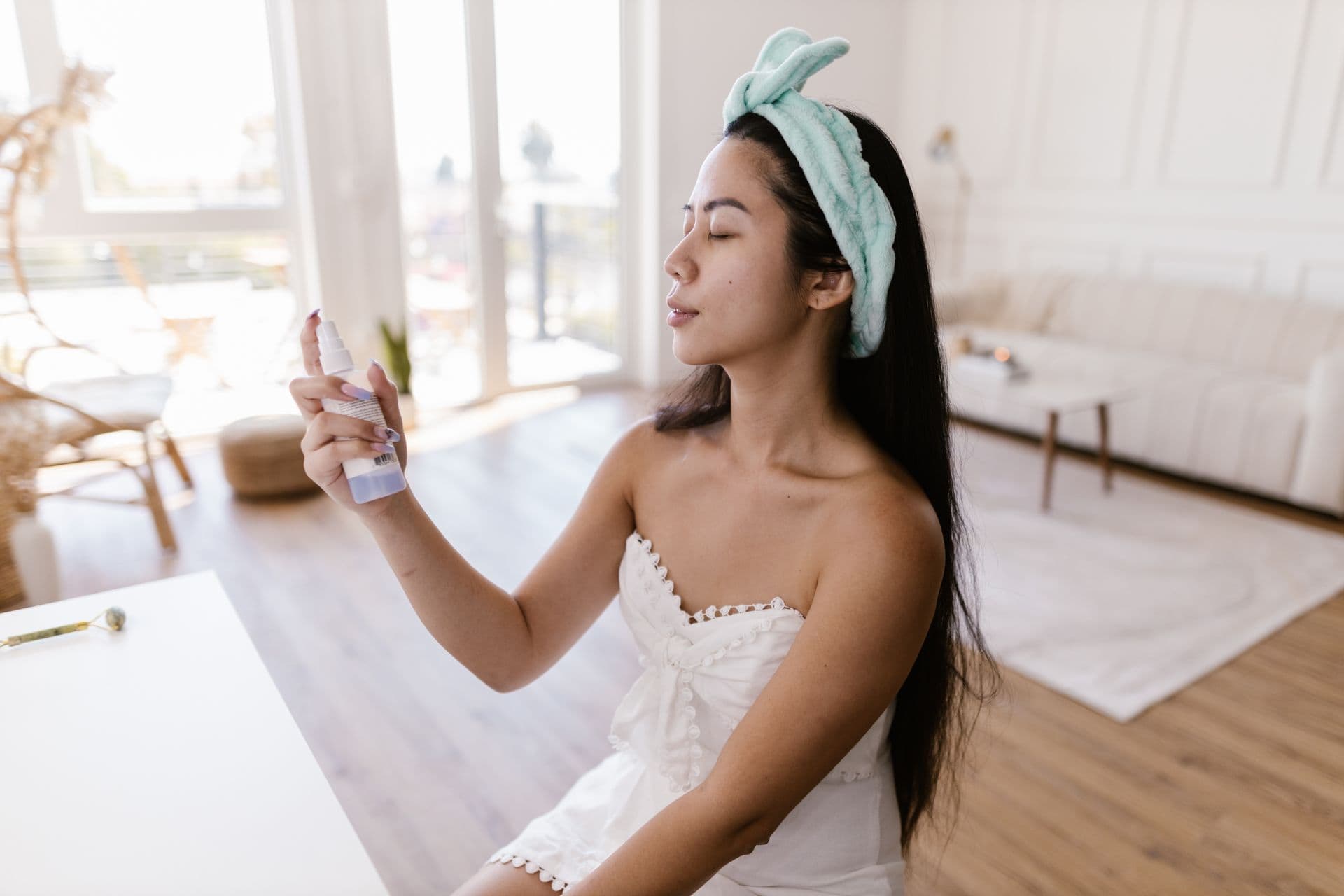
If you've been scrolling through skincare content recently, you may have noticed a slightly intimidating ingredient appearing in increasingly pretty bottles: hypochlorous acid.
Despite the name, this isn't another powerful exfoliating acid.
Hypochlorous acid, usually shortened to HOCl, is a substance that our own immune system produces as part of its defence against microorganisms. Scientists can also manufacture a stable version for use in products ranging from wound care to facial sprays.
And in 2026, it is having a serious skincare moment.
But what does it actually do — and is an HOCl spray worth adding to your routine?
First, Don't Let the Word “Acid” Scare You
When we hear acid in skincare, we tend to think of exfoliating ingredients such as glycolic, lactic or salicylic acid.
Hypochlorous acid works differently.
HOCl is naturally produced by cells in our immune system and has antimicrobial properties. It can be effective against microbes while remaining relatively gentle on healthy tissue.
That's one reason it has a history of use in wound care and skin preparation rather than simply being another cosmetic ingredient.
Recent scientific literature has also discussed its growing applications in skin preparation, skincare, aesthetics and dermatology.
Why Is It Suddenly in Skincare Sprays?
The appeal is easy to understand.
HOCl can offer antimicrobial action without relying on some of the harsher ingredients traditionally associated with disinfecting the skin. Its relatively gentle profile is one reason it has attracted attention for sensitive or easily irritated skin.
That's led to a new generation of fine facial mists marketed for use after workouts, during travel, after wearing makeup or whenever skin feels stressed.
Its popularity has also arrived alongside a broader skincare shift away from aggressive exfoliation and complicated routines and toward barrier health, recovery and long-term skin resilience.
HOCl fits neatly into that philosophy.
What About Acne?
This is where things become interesting — but also where it's worth keeping expectations realistic.
Because HOCl has antimicrobial properties, reducing bacteria on the skin could potentially help some people who experience breakouts.
That doesn't make a hypochlorous acid mist a replacement for established acne treatments.
Think of it as a supporting player rather than the star of your routine.
If you have persistent or severe acne, a beautifully packaged spray isn't a substitute for advice from a dermatologist or other qualified healthcare professional.
When Could an HOCl Spray Be Useful?
One of the most appealing things about hypochlorous acid is its simplicity.
Imagine you've finished a workout but won't be able to shower immediately. Or you've spent the day travelling, commuting or moving between appointments and your skin feels sweaty and uncomfortable.
A gentle HOCl mist can be an easy addition to those moments.
There is also established interest in HOCl around professional aesthetic treatments. Its antimicrobial properties and generally gentle profile have led to its use in skin preparation and post-procedure settings.
If you've had an aesthetic procedure, however, follow the aftercare instructions from your practitioner rather than automatically introducing a trending product.
There Is One Catch: Formulation Matters
Here's the part social media videos don't always mention.
Putting hypochlorous acid into a bottle isn't enough.
Manufactured HOCl solutions contain HOCl and hypochlorite ions in an equilibrium affected by factors including manufacturing method, stabilisation, pH and storage conditions. Those factors can change over time and influence the product's stability.
So this isn't an ingredient we'd recommend DIYing in your bathroom.
Buy a properly formulated skincare product, follow its storage instructions and pay attention to the recommended period after opening.
Does Everyone Need It?
No — and that's perhaps the most important part of the story.
A skincare ingredient can be useful without being essential.
If your current cleanser, moisturiser, SPF and treatment products are keeping your skin comfortable and healthy, there's no reason to add another step simply because social media has discovered a new spray.
One of the more encouraging beauty trends of 2026 is precisely the opposite: doing more isn't necessarily better. Simple routines and protecting the skin barrier continue to be important themes in professional skincare advice.
HOCl is interesting because it can potentially fit into a minimalist routine rather than making that routine more complicated.
The Blushyo Take
Hypochlorous acid deserves more than being dismissed as another viral skincare ingredient. It has legitimate medical and dermatological history behind it, and current research continues to examine its role in skin preparation and skincare.
But you don't need to turn your bathroom shelf into a chemistry laboratory.
If you have sensitive, easily irritated or breakout-prone skin — or simply want something gentle to use after exercise or during a long day — a well-formulated HOCl mist may be worth exploring.
Just remember the rule that applies to almost every beauty trend:
Your skin doesn't know what's viral. It only knows what works for it.